
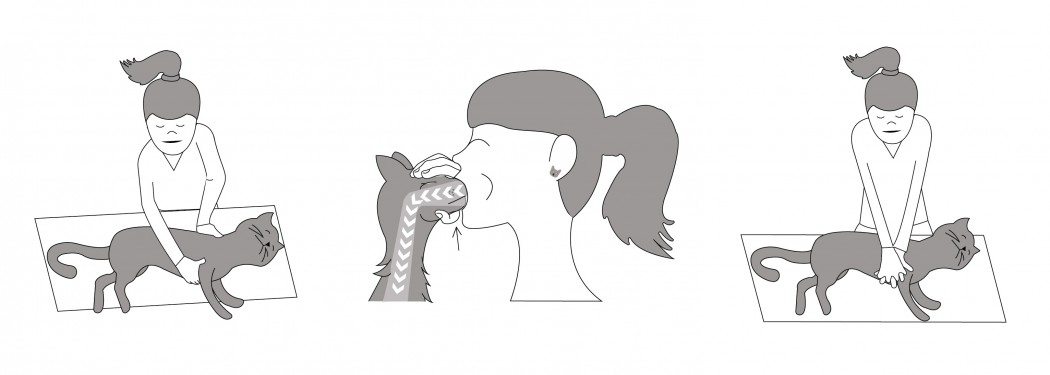
Hopefully you’ll never have to perform artificial respiration (AR) or cardiopulmonary resuscitation (CPR) on your adventure cat, but it’s a good idea to familiarize yourself with both in case of an emergency.
If your cat isn’t breathing, providing AR or rescue breaths, can help keep oxygen flowing. If your cat’s heart has stopped, chest compressions can help blood continue to circulate. When AR and chest compressions are performed together, it’s known as CPR, and when these techniques are performed correctly, they may provide you with time to get your cat to a veterinarian.
If your cat is unconscious, lethargic, injured or having difficulty breathing, seek veterinary help immediately. If your cat requires AR or CPR, perform them en route to a veterinarian if possible.
Decide if rescue breaths or CPR are necessary
Check to see if your cat is breathing. Watch to see if the animal’s chest is rising and falling. Hold your hand in front of the cat’s nose and feel for breath.
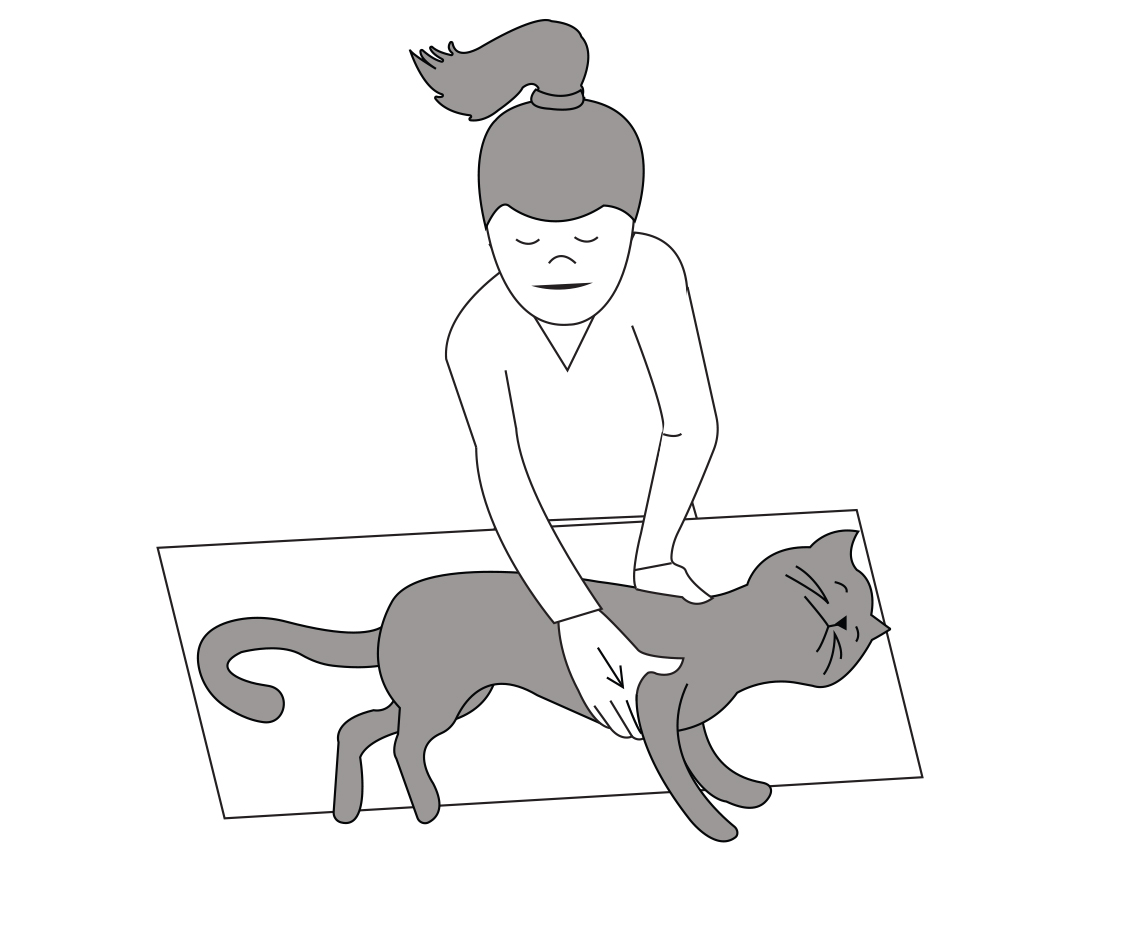 Check your cat’s pulse. Place your hand on the cat’s left side just behind the front leg where it meets the body. You can also listen for a heartbeat by placing your ear to the left side of the animal’s chest. A cat’s heart typically beats between 140 times to 220 times per minute.
Check the color of your cat’s gums. Gray or bluish gums signify the animal isn’t getting enough oxygen.
If your cat isn’t breathing
Lay the animal on its side, open the mouth and check if the airway is clear. Do not give the animal breaths if there is an obstruction.
If you see an object blocking the airway
Grab the cat’s tongue and pull it outward. If this fails to dislodge the object, WebMD advises pet owners to take hold of the cat’s neck behind the lodged object and apply enough compression to keep the object from going farther down the throat. Use your fingers to sweep the object out of the cat’s mouth.
If you’re unable to remove the object, perform the Heimlich maneuver.
WebMD instructs pet owners to place one hand along the feline’s back and the other just below the rib cage. Give four thrusts by pressing in and up, and then check the animal’s mouth for a foreign object. Repeat if necessary.
If the airway is clear
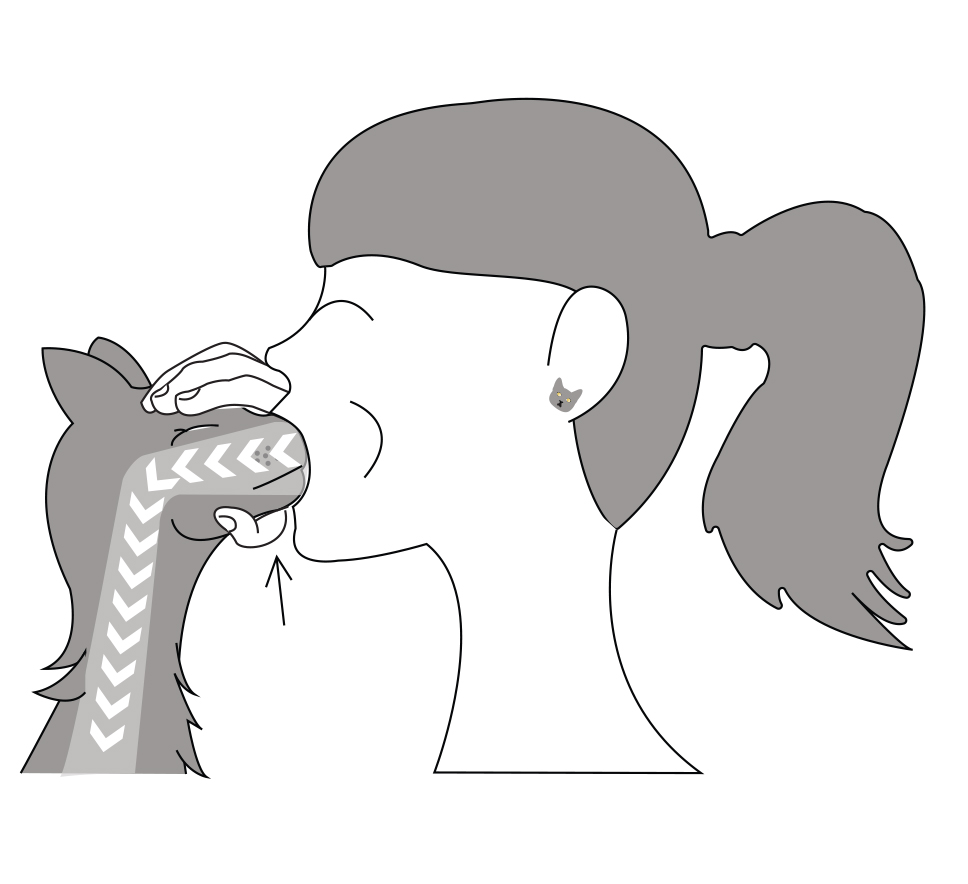 With the cat on its side, lift the chin to straighten the throat and pull the cat’s tongue to the front of the mouth. Close the mouth and gently hold it shut with one hand.
Place your mouth over the cat’s nose and mouth and gently breath short puffs of air into the nose. Watch to make sure the animal’s chest rises when you give a breath. Aim for one breath every 3 seconds to 4 seconds.
If your cat’s heart isn’t beating
With the cat on its side, begin chest compressions.
“If you have a small dog or a cat, you can actually do one-handed chest compressions or two-handed chest compressions,” said veterinarian Dr. Debbie Mandell.
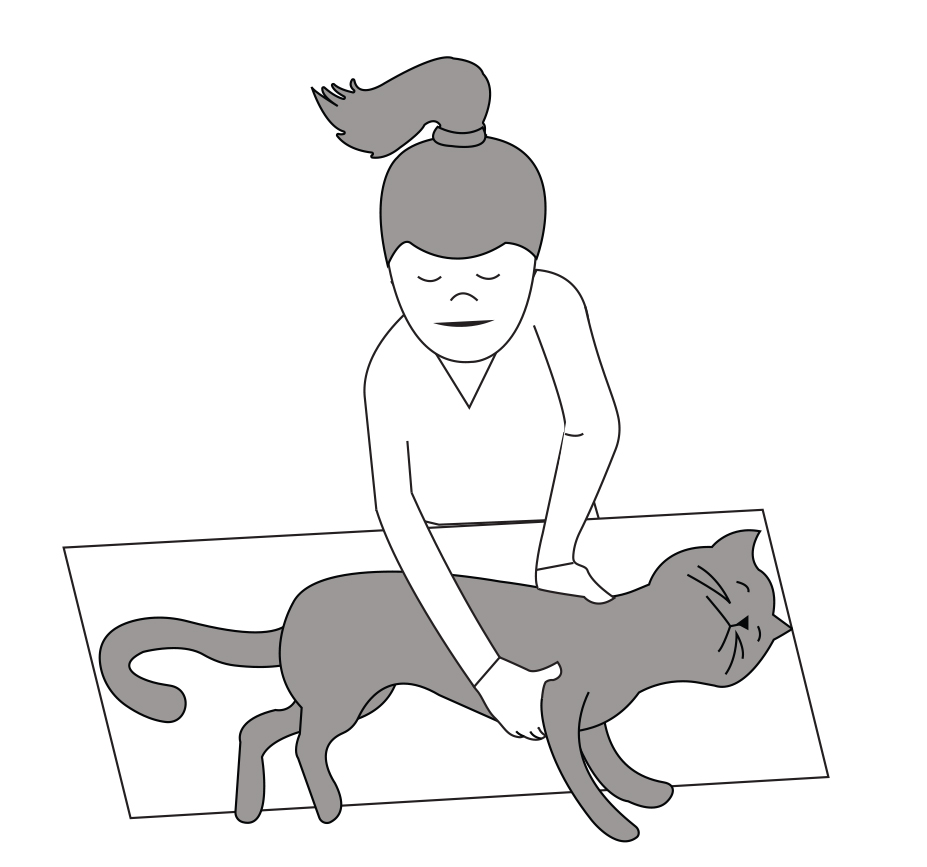 For one-handed compressions, take one hand and place your thumb on one side of the cat’s chest below the elbow. Position the fingers of the same hand on the other side of the cat’s chest. Give a quick squeeze to compress the chest about half an inch to an inch.
For two-handed compressions, place the palm of one hand on the cat’s rib cage over the heart, and put your other hand on top of the first. Compress the chest half an inch to an inch.
“The most up to date recommendation is to use 100-120 compressions per minute, usually with one hand for cats; however whatever works for the rescuer is good,” said Erin Dush, a third-year veterinary student at the University of Tennessee’s College of Veterinary Medicine. “The breaths are usually about 10 per minute but the emphasis is on compressions and getting to a veterinarian as soon as possible.”
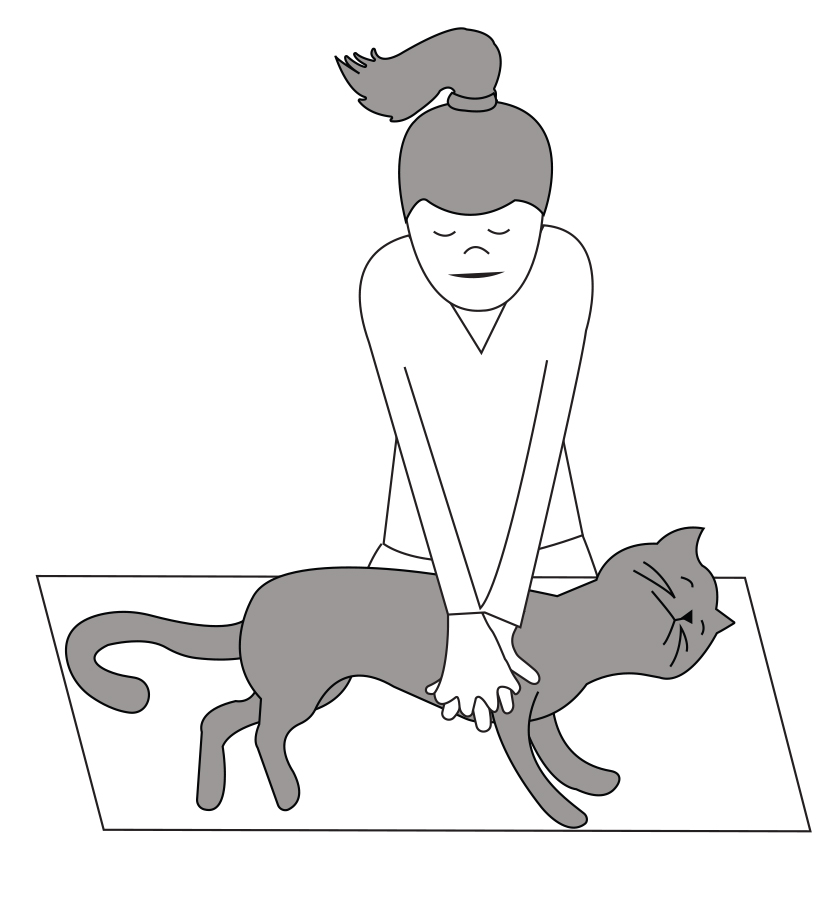 “It is said to do the compressions to the beat of ‘Staying Alive’ as it is about the correct rate and helps keep you from going too fast or slow during the emotionally charged and endorphin-rich time of an emergency.”
Pause every 2 minutes to check for a pulse and breathing.
Additional information
To learn more about cat CPR, download the Red Cross’ pet first-aid app, which features a variety of first-aid information, as well as how-to videos. Also, consider taking a pet first-aid course at your local Red Cross chapter.
Remember to immediately seek veterinary care if your cat isn’t breathing, doesn’t have a pulse or is exhibiting other symptoms that could indicate a medical emergency.